
Your Floors Have to Handle More Than Foot Traffic
When you live in Miami, your home deals with a unique set of challenges that most flooring guides simply don't address. Between the year-round humidity, the threat of tropical storms, sandy feet tracking in from the beach, and air conditioning running around the clock, your flooring needs to be tougher and more resilient than what works in other parts of the country.
Choosing the wrong material can lead to warping, mold growth, cracking, or a floor that looks worn out within just a few years. On the other hand, the right flooring choice can last decades, look stunning, and actually make your home easier to maintain. Here's what you need to know before making one of the most impactful decisions in your next remodeling project.
Why Miami's Climate Is So Hard on Floors
South Florida's average humidity hovers between 60% and 80% throughout the year. During the wet season, from May through October, it can spike even higher. That constant moisture in the air seeps into porous materials, causing them to expand, buckle, or develop mold underneath the surface.
Then there's the temperature factor. While Miami doesn't experience freezing winters, the contrast between the hot, humid air outside and the cool, dry air inside an air-conditioned home creates constant expansion and contraction cycles. Materials that can't handle this back-and-forth movement will eventually crack, gap, or warp.
Flooding is another real concern. Whether it's a tropical storm, a plumbing issue, or just heavy rain pushing water under a door, many Miami homeowners will deal with water intrusion at some point. Your flooring should be able to survive the occasional encounter with standing water.
Flooring Materials That Thrive in South Florida
Porcelain and Ceramic Tile
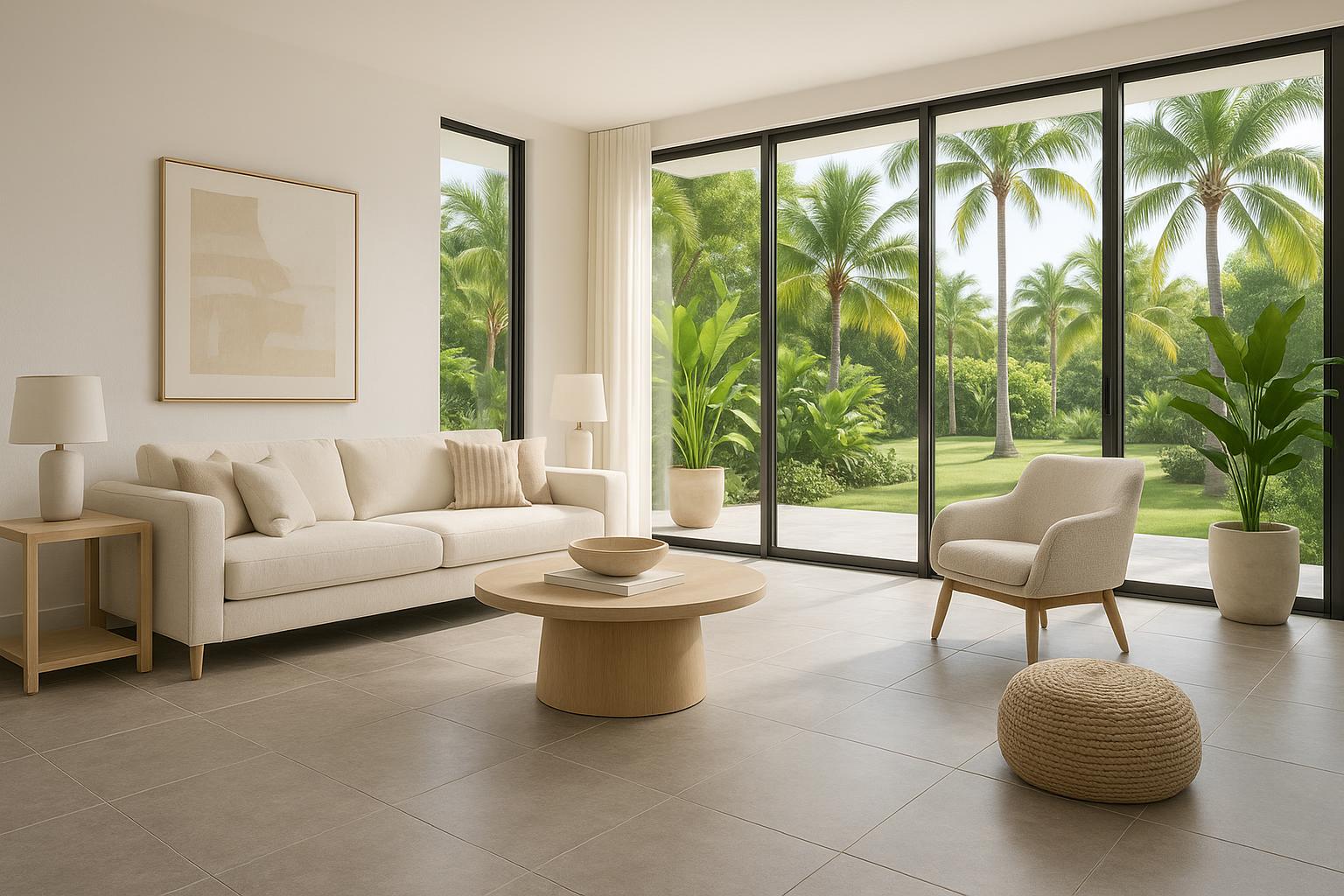
Tile has been a staple in Miami homes for good reason. Porcelain and ceramic tile are virtually waterproof, incredibly durable, and completely unaffected by humidity. They stay cool underfoot, which is a welcome bonus during those sweltering summer months. Modern tile comes in an enormous range of styles, including options that convincingly mimic natural wood grain and stone. For kitchens, bathrooms, and main living areas, tile remains one of the smartest choices for homeowners in Coral Gables, Kendall, Pinecrest, and throughout the Miami area.
Luxury Vinyl Plank (LVP)
Luxury vinyl plank has surged in popularity across South Florida, and for good reason. It's 100% waterproof, comfortable underfoot, and available in remarkably realistic wood-look designs. High-quality LVP with a rigid core handles humidity and temperature fluctuations without warping or expanding. It's also softer and warmer than tile, making it a great option for bedrooms and family rooms. For homeowners who love the look of hardwood but need something practical for Miami's climate, LVP is often the ideal compromise.
Polished Concrete
For a sleek, modern aesthetic, polished concrete is gaining traction in Miami renovations. It's impervious to moisture, extremely durable, and pairs beautifully with contemporary and minimalist interior designs. It can be stained or dyed in a wide variety of colors and finishes. The main consideration is comfort — concrete is hard and cool, so area rugs are a common addition in living spaces.
Natural Stone
Materials like travertine, marble, and slate bring timeless elegance to any home. They perform well in humid environments when properly sealed and maintained. Many historic and upscale homes in Coconut Grove and South Miami feature natural stone flooring that has aged beautifully over decades. Just be aware that stone requires periodic resealing and can be more susceptible to staining than tile or vinyl.
Materials to Think Twice About
Solid Hardwood
This is where many homeowners get surprised. Solid hardwood flooring, while gorgeous, is one of the most problematic choices for Miami homes. Wood is hygroscopic, meaning it absorbs and releases moisture from the air. In our consistently humid climate, solid hardwood planks tend to expand, cup, and buckle over time. Even with climate control running constantly, the moisture levels in a typical South Florida home are often too high for solid wood to remain stable.
Laminate Flooring
Standard laminate flooring is essentially compressed wood fiber with a photographic layer on top. When exposed to moisture — whether from humidity, spills, or minor flooding — the core swells and the edges lift. While some newer waterproof laminate products have improved, traditional laminate is a risky bet in Miami. If you're drawn to the wood look, luxury vinyl plank offers a similar aesthetic with far better moisture resistance.
Carpet
Wall-to-wall carpet in a humid climate is a recipe for mold and mildew growth, especially in rooms without strong air circulation. Carpet fibers trap moisture, dust, and allergens, which is particularly problematic given Miami's year-round warmth. If you love the softness of carpet, consider using area rugs on top of a moisture-resistant flooring material instead. They're easier to clean, replace, and dry out after any water exposure.
What About Engineered Hardwood?
Engineered hardwood sits in a middle ground. It's constructed with a real wood veneer on top of multiple layers of plywood or high-density fiberboard, which makes it more dimensionally stable than solid hardwood. High-quality engineered hardwood with a thick wear layer can perform reasonably well in Miami homes, especially in rooms that are consistently climate-controlled. However, it's still not waterproof, so it's not the best choice for bathrooms, laundry rooms, or areas prone to water exposure. If you go this route, invest in a premium product and ensure proper installation with appropriate moisture barriers.
Practical Tips for Your Flooring Project
- Test your subfloor moisture levels before any installation. A professional installer should always perform moisture testing, especially in older Miami homes built on concrete slabs.
- Choose materials rated for high-humidity environments. Don't rely on product descriptions alone — ask specifically about performance in tropical climates.
- Consider transitions between rooms carefully. Many homeowners use tile in wet areas and LVP or engineered wood in bedrooms. Planning clean, attractive transitions between materials is an important design detail.
- Account for your lifestyle. Homes with kids, pets, or heavy foot traffic need flooring that resists scratches and dents. Porcelain tile and high-quality LVP excel in these situations.
- Think long-term value. Cheaper flooring that needs replacement in five years costs more than a quality installation that lasts twenty. Factor in durability, maintenance, and potential water damage when comparing costs.
Getting Expert Guidance Makes a Difference
Flooring is one of the most visible and most-used elements of any home. It affects how your space looks, how it feels, and how much maintenance it demands from you over the years. In a city like Miami, where the climate adds an extra layer of complexity, making an informed choice upfront saves you from costly mistakes down the road.
At Aether Interior Remodeling, we help homeowners across Miami, Coral Gables, South Miami, Kendall, Coconut Grove, and Pinecrest select and install flooring that's built to handle real South Florida living. Whether you're renovating a single room or reimagining your entire home, we'll guide you toward materials and designs that look beautiful and perform flawlessly for years to come.
Ready to explore your flooring options? Reach out to our team for a consultation, and let's find the perfect foundation for your home.